
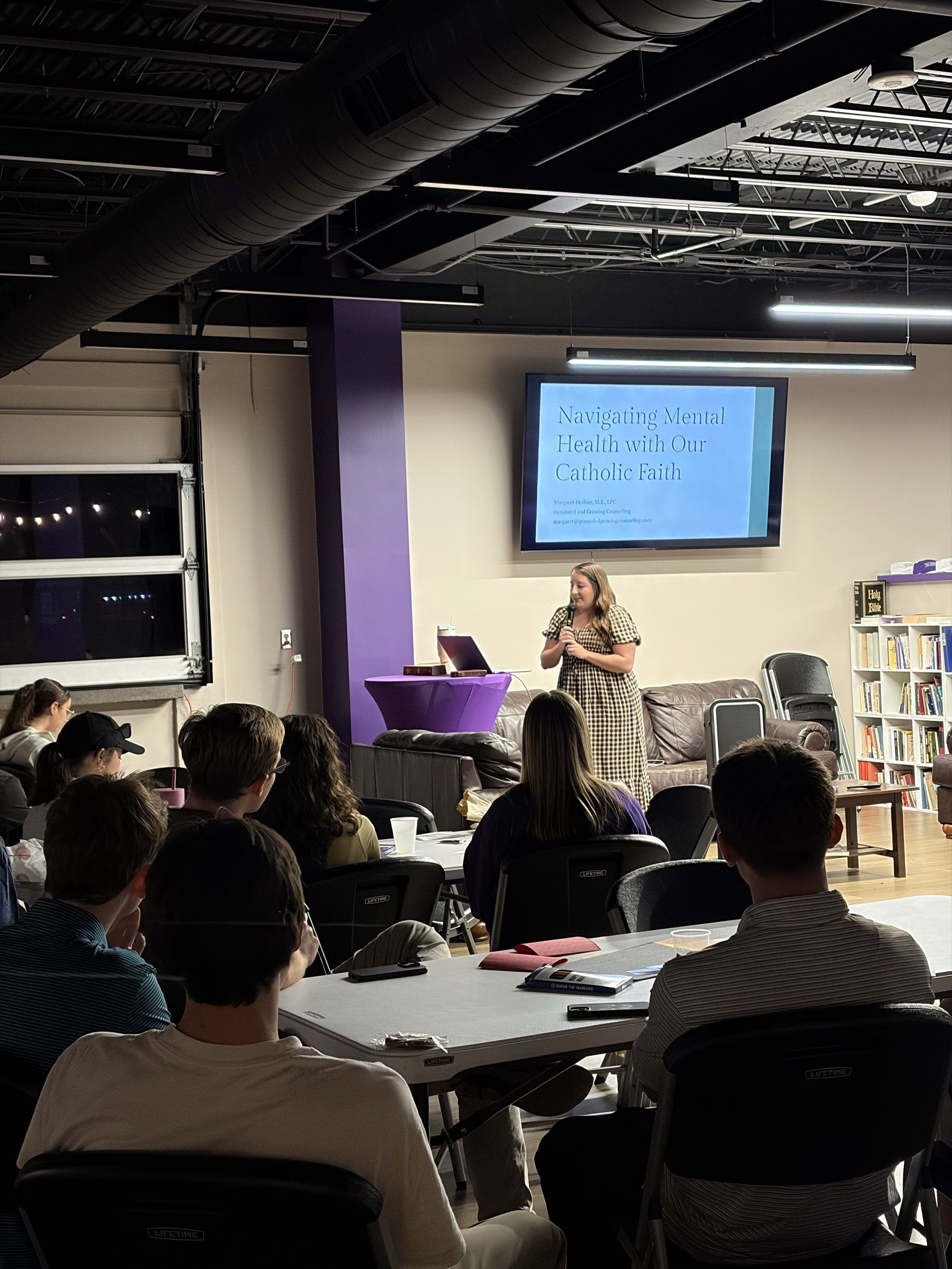
Recently, I spoke to college students at TCU about stress, burnout, and what it looks like to slow down in a culture that rewards constant doing. The conversation reminded me of something I see often in my work with young adults: most people aren't struggling because they're doing something wrong. They're struggling because they've been in overdrive for so long that slowing down feels risky. So, why does rest feel so hard, even when we're exhausted?
Why We Stay in Overdrive
Not all stress is bad. A moderate level of stress, sometimes called eustress, helps us focus, find energy, and be productive. The problem is what happens when stress never lets up. At higher levels and over longer stretches, it becomes distress: our focus drops, avoidance and procrastination increase, and we feel overwhelmed or too anxious to do what's in front of us.
Stress is designed to activate us in short bursts. When it becomes constant, the body stays on high alert, flooded with stress hormones like cortisol, and rest can start to feel wrong. Many people describe lying down to sleep or watching a show while their mind insists they should be studying or answering an email. They end up too exhausted to be productive and too guilty to actually rest.
Another piece of the puzzle is the difference between the stressor (the deadline, the project, the hard conversation) and the stress itself, which lives in our bodies and emotions. Even after the stressful event is over, our bodies often keep carrying it, especially if we quickly move on to the next stressor. And when we move straight from one stressor to the next without recovering, the result over time is burnout.
What I See in the Young Adults I Work With
With the young adults I work with and the TCU students I spoke with, they tend to have full plates. What makes it harder is that nearly everything on them is good: classes, jobs, friendships, campus involvement, service, preparing for the future. When every option is worthwhile, deciding what to let go of can be the hardest part, and saying no can feel like letting someone down.
The pressure often comes from two directions. There are external expectations from family, professors, and peers, and there is the internal pressure to keep up, perform, and be perfect. Students also compare themselves to their own past selves ("I managed all of this last semester, so I should be able to now"), which can be the hardest comparison of all. For many people, faith and values are part of this picture too, sometimes adding to the pressure to say yes and sometimes offering permission to rest.
What Slowing Down Actually Looks Like
Slowing down doesn't have to mean overhauling your life. A few small, practical shifts can make a real difference:
Audit what you're carrying: When you plan your week, ask what your actual responsibilities are in this season of life, and where you're showing up out of genuine desire versus guilt, comparison, or fear of missing out. Just because something is good doesn't mean it's yours to do right now.
Put rest on the calendar: Block time for yourself and treat it like an important meeting. When the time comes, check in with what would feel life-giving, whether that's a nap, a walk, a longer meal, or simply an evening with nothing planned.
Take 60 seconds to check in: Pause and notice what's happening in your body and mind. Are you tense? Tired? What emotion is underneath what you've been carrying today? Catching early warning signs like irritability, poor sleep, or racing thoughts lets you respond before you hit a wall.
Why This Work Matters to Me
If you don't choose when to slow down, your body will often choose for you. I know that from my own college years, when I spent a season pouring into everyone around me while rarely checking in with myself. Nothing on my plate was bad, and I still ended up depleted. Counseling helped me see that limits aren't a personal failure, and that learning to slow down is a skill, not a luxury.
Slowing down doesn't mean doing less of what matters; it often means being more present to it. Taking care of our minds and bodies is part of living well. Every time I get to talk with a client or a room of people about this, I notice a similar kind of relief, as though people were waiting for permission to admit they're tired. That moment is a big part of why I love doing this work.
Let's Work Together
Want to bring this conversation to your community? I offer talks and training on mental health and well-being for a range of audiences, including college students, youth ministries, young adult groups, engaged and married couples, and ministry teams. If you're interested in bringing a similar presentation to your organization, I'd love to talk it through with you!
Feeling stretched thin yourself? If this post sounded a little too familiar, you don't have to figure out how to slow down on your own. I work with young adults struggling with stress and burnout through counseling in Southlake and online.